Monero (XMR) Plunges After KuCoin Delisting Announcement: Is Zcash (ZEC) Next?
TL;DR
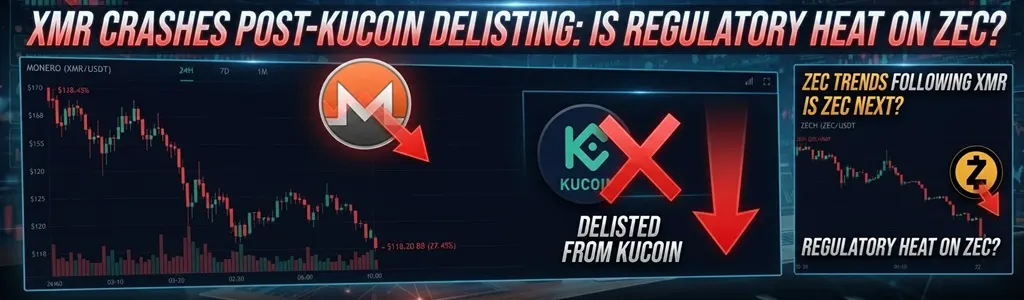
- Monero (XMR) dropped approximately 12% after KuCoin announced plans to remove its four spot trading pairs on November 30, 2026.
- Zcash (ZEC) remains available on KuCoin, highlighting the exchange’s different approach to privacy-focused cryptocurrencies.
- Increasing regulatory pressure in Europe is creating uncertainty for privacy coins, although self-custody and decentralized trading remain important alternatives.
Monero (XMR) faced renewed selling pressure on November 26 after cryptocurrency exchange KuCoin confirmed it would remove the privacy-focused asset from its trading platform. The announcement triggered a sharp price decline and raised fresh questions about the future of privacy coins, particularly Zcash (ZEC), which continues trading on the exchange.
The decision comes as cryptocurrency platforms face increasing regulatory scrutiny over transaction anonymity and compliance requirements. However, the latest developments also highlight the growing importance of financial privacy and alternative ways to access digital assets.
Kucoin delisting XMR has huge implications.
Over 50% of users sourced their XMR indirectly from Kucoin, it fuelled ALL instant swap exchanges.
Instant swap exchanges don't have their own liquidity, they simply wrapped around Kucoin and sold/bought into their order books.
With… pic.twitter.com/waJ9lmaIDs
— PerpetualCow.hl (@PerpetualCow) November 26, 2026
Monero (XMR) Delisting Raises Questions About Zcash’s Future
KuCoin plans to discontinue four Monero trading pairs, including XMR/USDT, XMR/USDC, XMR/ETH, and XMR/BTC, starting November 30 at 08:00 UTC. The exchange cited its platform policies but did not provide a specific explanation for targeting the cryptocurrency.
Trading liquidity represents another concern. KuCoin’s XMR/USDT market previously handled approximately $84 million in daily volume, making its removal significant for traders seeking access to centralized liquidity.
Zcash presents a different situation. Unlike Monero, which applies transaction privacy by default through technologies such as ring signatures and stealth addresses, Zcash supports both shielded and transparent transactions. This flexibility gives users greater control over transaction visibility and offers exchanges different compliance considerations.
At the time of the announcement, KuCoin had not published a corresponding delisting notice for ZEC. Its existing ZEC trading pairs remained available, although this does not guarantee that the situation will remain unchanged.
Regulatory Pressure Challenges Privacy Coins Across Global Markets
Europe represents an important part of this discussion. The European Union’s Anti-Money Laundering Regulation introduces restrictions on crypto-asset service providers offering anonymous accounts or services that enable transaction anonymization. The relevant provisions apply from July 10, 2027.
These requirements could increase compliance costs for exchanges supporting privacy-oriented assets. Nevertheless, regulatory restrictions on service providers do not automatically eliminate the underlying blockchain networks or prevent individuals from holding cryptocurrencies independently.
Monero has already experienced withdrawals from several centralized trading platforms, including Binance and Kraken in certain jurisdictions. Each delisting reduces available exchange access, but it does not shut down the Monero network.
This story was originally published by Crypto Economy. Read the original article.