Bitcoin and Ether ETFs Lose $1.47B in a Week as BlackRock’s IBIT Logs Record Outflow
Spot crypto funds extended their retreat in November, with BlackRock's Bitcoin fund posting its largest single outflow on record.
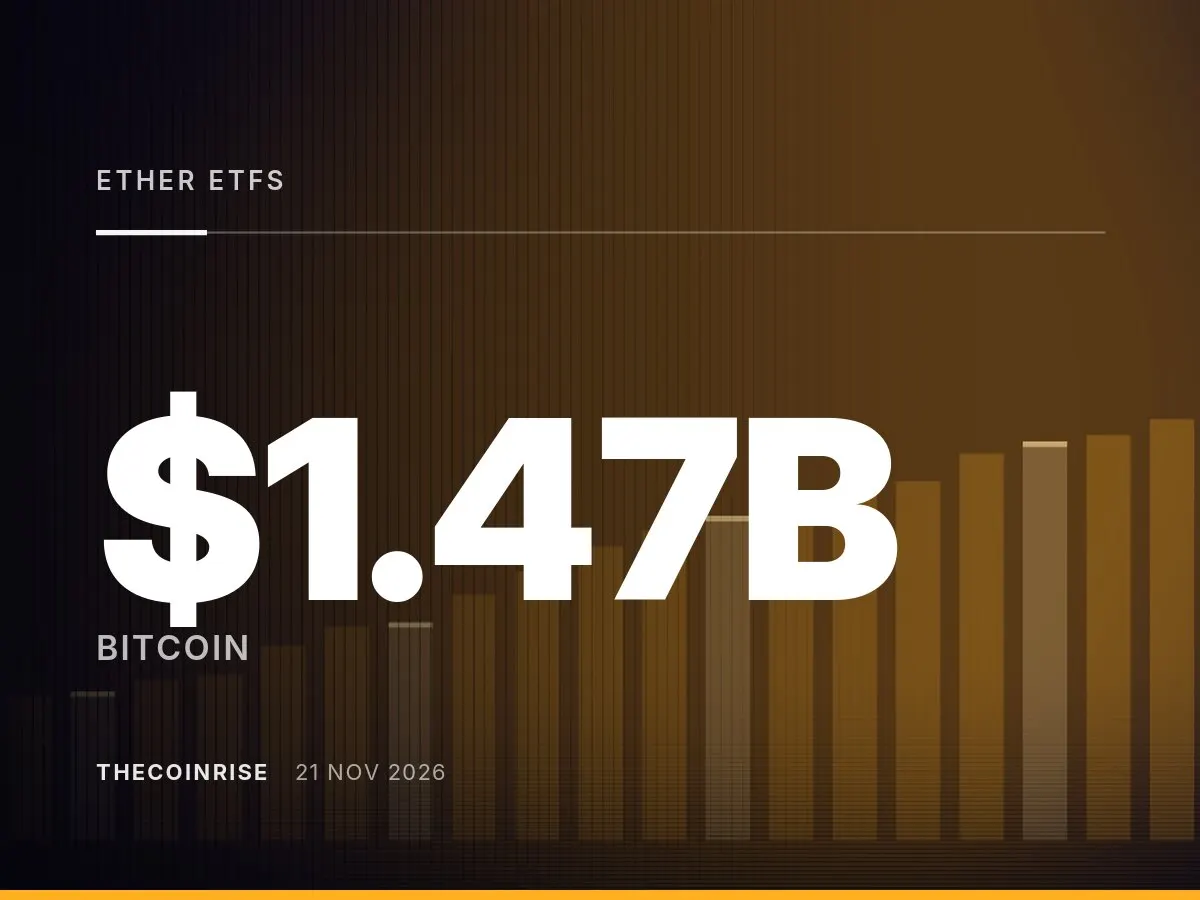
Spot Bitcoin and Ether exchange-traded funds in the United States have extended a streak of withdrawals. Crypto.news reported that the combined products lost about $1.47 billion over a one-week period. The figure signals a pullback in institutional appetite after months of steady inflows into regulated crypto funds.
A separate report from CryptoBriefing put the scale of the retreat in a longer timeframe. It said Bitcoin ETFs alone have bled $3.47 billion in outflows during November. That report also flagged a standout data point: BlackRock's iShares Bitcoin Trust, known as IBIT, posted a $541 million outflow, described as a record for the fund.
The two accounts differ in scope and measurement window. Crypto.news framed its figure as a weekly total spanning both Bitcoin and Ether products. CryptoBriefing's number covers Bitcoin-only funds over the course of the month, with the IBIT figure cited as a single, notable outflow event. Readers should treat the two totals as describing related but distinct slices of the same broader trend, rather than as directly comparable numbers.
IBIT has functioned as a bellwether for institutional demand since its launch. It has consistently ranked among the largest spot Bitcoin funds by assets under management. A record outflow from that specific vehicle carries weight because of its size and because large asset managers often use IBIT as their default Bitcoin exposure. A reversal there tends to draw more attention than outflows spread across smaller, less-tracked products.
Spot Bitcoin and Ether ETFs were approved by US regulators to give investors regulated, exchange-traded access to crypto price exposure without directly holding the underlying coins. Since their debut, flow data for these products has become a widely watched proxy for institutional sentiment toward digital assets. Sustained inflows have historically coincided with price strength, while stretches of outflows have often lined up with broader market caution.
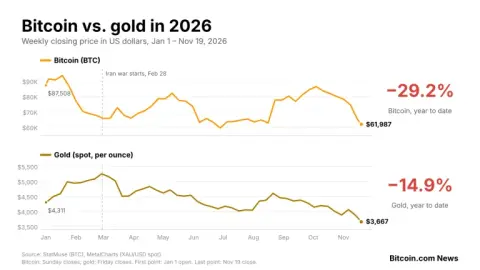
The current outflow streak arrives amid a wider pullback in crypto markets through much of November. Macro uncertainty, shifting rate expectations, and profit-taking after earlier rallies have all been cited elsewhere as contributing factors to softer risk appetite. ETF flow data does not explain all of that movement on its own, but it offers one concrete, trackable signal of how institutional allocators are behaving in real time.
Both reports underscore that the magnitude of withdrawals, even if the precise totals differ by methodology, points to a genuine shift in short-term positioning among ETF investors. Whether that shift proves temporary or marks a more extended pause in institutional buying remains to be seen in coming weeks of flow data.
Market Impact
Sustained ETF outflows can weigh on spot crypto prices by reducing a steady source of institutional buying pressure that has supported markets since the funds launched. A record single-fund outflow from IBIT, given its size and prominence, may also influence sentiment among other institutional allocators who track its flows as a proxy for broader demand.
At the same time, flow data from ETFs captures only one channel of market activity. Spot and derivatives markets, along with direct institutional holdings outside ETF wrappers, continue to move independently. Investors and analysts will likely watch upcoming weekly and monthly flow reports to determine whether this outflow trend persists or reverses.
The divergence in reported figures highlights how differently flow data can be sliced across timeframes and asset types. Continued monitoring of weekly and monthly ETF flows will help clarify whether this outflow episode marks a brief pause or a more sustained shift in institutional positioning.
Frequently Asked Questions
How much did Bitcoin and Ether ETFs lose in outflows?
Crypto.news reported combined Bitcoin and Ether ETF outflows of about $1.47 billion over a one-week period, while CryptoBriefing reported Bitcoin ETFs alone lost $3.47 billion over the month of November.
What happened with BlackRock's IBIT fund specifically?
CryptoBriefing reported that BlackRock's IBIT, one of the largest spot Bitcoin ETFs, posted a $541 million outflow, which it described as a record for the fund.
Why do the two reported figures differ?
The reports use different scopes and timeframes. One covers a weekly total across both Bitcoin and Ether funds, while the other covers a monthly total for Bitcoin funds only, alongside a single notable outflow figure for IBIT.
Why do ETF outflows matter for crypto markets?
Spot Bitcoin and Ether ETFs are widely used as a gauge of institutional demand. Sustained outflows can signal reduced buying pressure and cautious sentiment among large investors.
This story was originally published by The Coin Rise. Read the original article.