Binance Absorbs $3.64B in Net Outflows as Withdrawals Stabilize After the $6.3B Hack

Binance processed $4.649 billion in withdrawals and $1.01 billion in deposits between 06:00 and 15:30 UTC on November 1, the first hours after it reopened customer withdrawals in phases following the $6.3 billion hack. Net outflows of about $3.64 billion equal 2.1% of the $171 billion in assets the exchange reported on its October 28 proof-of-reserves snapshot, according to Binance’s recovery update. Read one way, that is the heaviest single-day redemption test a major venue has absorbed since the 2022 FTX collapse. Read another, it is a contained stress event against the balance sheet, and the exchange says the pressure is already fading.
Binance began restoring withdrawals in phases at 06:00 UTC on November 1, 2026. By 12:36 UTC, withdrawals had resumed for all 15 networks and assets in the initial phase.
— Binance (@binance) November 1, 2026
The Flow Curve Was Front-Loaded
The redemption pressure was heaviest in the first hours. Withdrawals peaked at $733 million in the half-hour interval beginning 08:00 UTC, about two hours after Bitcoin became the first network to reopen at 06:20 UTC. Deposits peaked at $187 million in the 08:30 UTC band. Every interval in Binance’s charts closed in net outflows, but the totals shrank through the morning, and the exchange said withdrawal volumes had declined and were stabilizing after the initial spike.
For every dollar that left, only about 22 cents came back. The deposit-replacement ratio — $1.01 billion in fresh deposits against $4.649 billion in withdrawals — is 21.7%, the cleanest way to read the day. A ratio that low is ordinary for a panic window and would turn alarming only if it persisted across several sessions.
The Replacement Ledger: 95% Covered, Ten Assets Fully Backed
Binance has now covered about 95% of the impacted amount, up from 90% in its prior update and 80% in the one before that. “Binance has now covered approximately 95% of the impacted amount, up from 90% in our prior update,” the exchange wrote in its fourth recovery update, which followed the phased reopening of withdrawals. The remaining 5% sits in tokens outside the top ten by market standing, which Binance says are less liquid and take longer to source at the required scale.
Ten assets are fully backed, the exchange said: BTC, ETH, USDT, BNB, SOL, USDC, XRP, USD1, RLUSD and ZEC. Binance has said it set aside more than $6.34 billion to cover the breach, drawn from its SAFU emergency fund, the futures insurance fund and the corporate treasury. Set the two figures side by side and the day’s picture sharpens: the $3.64 billion that walked out on November 1 is more than half the $6.34 billion Binance allocated to make customers whole.
Why the Money Left: The Attribution Layer
The outflows were not a judgment on any single network or token. They were a response to the theft itself. The FBI attributed the October 29 attack to North Korea on October 31, naming the activity “TraderTraitor” and observing the attackers converting stolen assets primarily into Ether, per the bureau’s public alert. “The FBI is releasing information advising that the Democratic People’s Republic of Korea (North Korea) was responsible for the theft of more than $6 billion USD in virtual assets from cryptocurrency exchange Binance, on or about October 29, 2026,” the bureau wrote.
Binance thanked the bureau’s cyber branch and said roughly $3 billion of the stolen assets has been frozen so far. Blockchain analytics firm TRM Labs had previously attributed the attack to the North Korea-linked TraderTraitor group with high confidence. The exchange’s preliminary investigation points to a compromised laptop belonging to an engineer as the initial vector, followed by unauthorized withdrawals from an internal service.
The Countercase: 2.1% Is Not a Run
The strongest argument that Binance has already passed the test is the denominator. Two percent of assets in a day is a stress event, not a bank run. At the November 1 pace, redeeming the exchange’s full $171 billion would take roughly 47 sessions — a reminder that even a record-setting outflow is small against the balance sheet, provided the outflows stop. The stabilizing-volume claim is the signal to watch, not the headline total.
There is precedent for the market looking past an exchange crisis once solvency is credible. After FTX collapsed in November 2022, withdrawals from major venues were sustained and self-reinforcing. The difference this time is that Binance kept deposits open throughout, published a proof-of-reserves process and disclosed a partial freeze of stolen funds. None of that proves the outflows have ended, but it separates a contained incident from a solvency crisis.
What the Numbers Cannot Yet Prove
Every figure here traces to Binance’s own reporting, and the exchange has a commercial incentive to describe the day as contained. The 95% coverage figure and the $6.34 billion set-aside are company claims, not audited results. The proof-of-reserves snapshot that would let an outside party verify the ten fully-backed assets was taken at 00:00 UTC on October 31, and the updated report is expected November 2. Until that lands, “fully backed” remains an assertion.
There is also a lag question the flow data cannot answer. The $4.649 billion counts withdrawals Binance processed, not the full universe of redemptions that were queued or delayed during the phased rollout. The exchange itself warned users to expect temporary delays, so the true redemption demand may run higher than the processed figure.
The Two Numbers That Decide the Story Next
The November 2 proof-of-reserves update is the first hard checkpoint. It will either confirm the ten fully-backed assets at one-to-one or force a repricing of the contained narrative. The second signal is whether net flows turn positive within the next several sessions. A single $3.64 billion outflow day is survivable; a second or third consecutive day at that scale would change the arithmetic entirely.
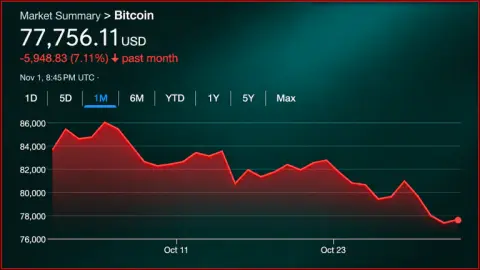
For the broader market, the episode is a reminder that exchange balance-sheet risk still dominates crypto’s macro picture. Bitcoin held near $77,800 and Ether near $2,260 in the hours after the data, per Coinbase spot pricing, with the market treating the outflows as a headline event rather than a solvency event — even as US spot Bitcoin ETFs shed $409 million in the first post-hack session. Whether that composure survives the November 2 release is the real question.
This story was originally published by Blockchain Reporter. Read the original article.