Zcash Activates NU7 Upgrade, Burning 60% of Transaction Fees
The network's latest protocol change removes the majority of fees paid on transactions from circulating supply.
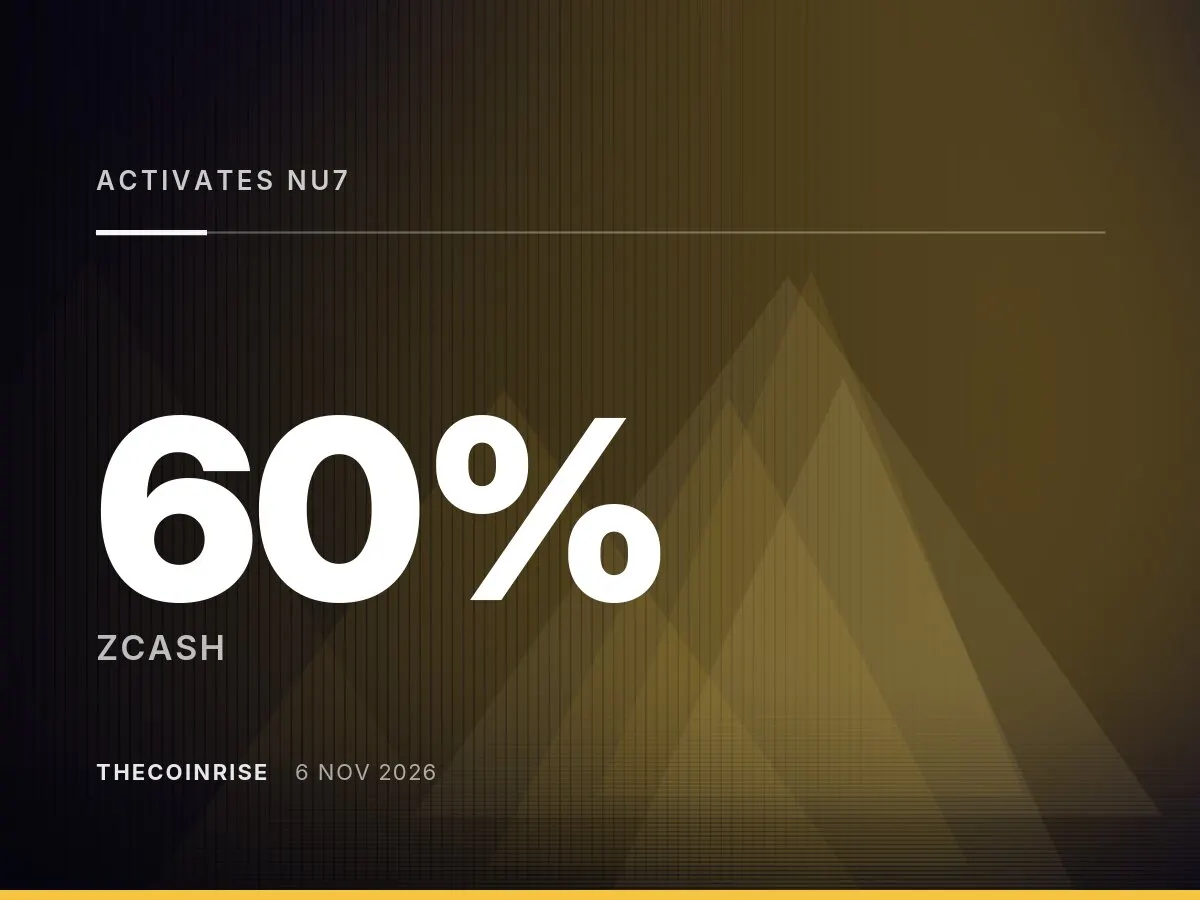
Zcash has activated NU7, a scheduled network upgrade that changes how transaction fees are handled on the blockchain. According to Unchained, the upgrade removes 60% of fees paid during transactions from circulation entirely, rather than routing them to miners or validators as before.
Network upgrades, commonly labeled NU followed by a number, are how Zcash implements major protocol changes. Each prior upgrade has adjusted elements of the network's consensus rules, privacy features, or economic design. NU7 continues that pattern but focuses specifically on fee mechanics rather than shielding technology or mining rewards.
Taking a majority of fees out of circulation functions similarly to a burn mechanism seen on other blockchains. Ethereum introduced a comparable approach with EIP-1559, which destroys a portion of transaction fees instead of paying them fully to validators. Such designs are typically intended to introduce a deflationary pressure that offsets new coin issuance over time.
Zcash has long positioned itself as a privacy-oriented alternative to Bitcoin, using zero-knowledge proofs to allow shielded transactions that hide sender, receiver, and amount data. The project's monetary policy has followed a halving schedule modeled on Bitcoin's, with block rewards decreasing at fixed intervals. NU7's fee-burning feature adds a separate lever for influencing supply, operating independently from the halving mechanism.
The activation arrives as privacy coins face continued scrutiny from regulators in multiple jurisdictions. Exchanges in some regions have delisted privacy-focused assets over compliance concerns tied to anti-money-laundering rules. Protocol-level changes like NU7 do not directly address those regulatory pressures, but they do demonstrate ongoing development activity on the network.
Details on the exact fee formula, activation block height, and how the burned portion is calculated were not specified beyond the headline figure of 60%. Further technical documentation from the Zcash development community would typically clarify how the mechanism applies across both shielded and transparent transaction types.
Market Impact
A reduction in circulating supply tied to transaction activity could, in theory, create modest deflationary pressure on Zcash over time, assuming transaction volume remains steady or grows. Whether this translates into any meaningful change in market dynamics depends on factors not addressed in the available reporting, including actual fee volumes and network usage trends following the upgrade.
For now, the activation represents a technical and economic design change rather than a market-moving event in isolation. Traders and holders will likely watch on-chain data in the weeks following NU7's activation to assess the real-world impact on supply and fee behavior.
NU7's activation marks another step in Zcash's ongoing effort to refine its protocol economics. The practical effects of the fee-burning mechanism will become clearer as more transaction data accumulates on the upgraded network.
Frequently Asked Questions
What is NU7?
NU7 is the seventh major network upgrade activated on the Zcash blockchain, part of a series of scheduled protocol changes.
What does it mean that 60% of transaction fees are taken out of circulation?
A majority portion of fees paid during transactions is removed from the circulating supply instead of being distributed in full, functioning similarly to a burn mechanism used on other blockchains.
Does NU7 affect Zcash's privacy features?
The reported details of NU7 focus on fee handling rather than changes to the shielded transaction system that underpins Zcash's privacy functionality.
How does this compare to Ethereum's fee-burning model?
The mechanism resembles Ethereum's EIP-1559 upgrade, which also destroys a portion of transaction fees rather than paying them entirely to network validators.
This story was originally published by The Coin Rise. Read the original article.