Why a Winning Bitcoin Hedge Can Still Be Cut by an Exchange
Key Takeaways
- Binance redeployed part of its futures insurance fund.
- BTC, ETH, BNB USDT contracts share one fund.
- ADL guarantee lapses above 10B USDT open interest.
- Delta Neutral protection requires VIP 4 status.
In its October 31 recovery update, Binance said the fund still sits above the coverage level its risk framework requires, while conceding that “no exchange can completely avoid auto-deleveraging.”
That fund is the last cushion before Binance starts closing traders’ profitable positions to cover someone else’s default. For anyone holding Bitcoin and shorting futures against it, those profitable positions include the hedge.
What the Insurance Fund Absorbs Before ADL
When a leveraged trader is liquidated and their margin runs out before the position can be closed, Binance treats it as a bankrupt position. Its insurance fund documentation says the fund takes over such positions and covers the gap between the bankruptcy price, where the trader’s margin hits zero, and the price at which the liquidation actually executes.
The fund’s reach is not the same as its balance. Each pool can absorb bankrupt positions only up to a maximum takeover capacity, set as a multiple of its balance, and Binance keeps that multiplier confidential. Outsiders can see the balance but not how much exposure it can take on.
Past that limit, the matching engine switches to auto-deleveraging, or ADL. It closes opposing traders’ profitable positions to offset the bankrupt one, which Binance describes as the final step of the liquidation process. Because BTC, ETH and BNB USDT-margined contracts draw on one shared pool, a liquidation wave in Ether can consume the same buffer that stands behind a Bitcoin hedge.
The redeployment sits within rules Binance had already published. The fund’s required minimum is calibrated to a 99.9% confidence interval and historical stress scenarios, and anything above that minimum may be used for other purposes. Binance adds that the 99.9% figure says nothing about how often ADL is avoided.
What a 40% Cut Does to a 10 BTC Hedge
Take an investor holding 10 BTC who shorts the equivalent of 10 BTC in BTCUSDT perpetual futures, a standard offsetting long-and-short setup. If ADL closes 40% of the short during a sell-off, the account changes like this:
| Before the cut | After a 40% cut | |
|---|---|---|
| Bitcoin held | 10 BTC | 10 BTC |
| Short futures | 10 BTC | 6 BTC |
| Net exposure | Flat | Long 4 BTC |
| BTC falls a further $5,000 | Holding −$50,000, short +$50,000 | Holding −$50,000, short +$30,000 |
| Combined result | About $0 | About −$20,000 |
Nothing in the spot holding changed and the trader placed no order, yet the account went from flat to directional. The profit on the closed portion is settled at that point rather than wiped out.
That settled profit can be smaller than the screen suggests. The closed portion fills at the bankrupt trader’s bankruptcy price, which Binance warns may fall outside the contract’s market price range. In a crash, that is a level the market has already fallen through, so the short is closed above the last traded price. Binance charges no trading fee on the deleveraged side.
The cut also clears the orders around the position. Binance’s clearing procedures cancel all open orders across every symbol in cross-margin mode, or for the affected symbol in isolated mode, so a stop placed to rebuild the hedge at a set level disappears with them. Re-entry is allowed straight away, at whatever price and funding rate the market then offers.
Hedgers using coin-margined contracts start from a weaker position. Binance says those contracts are more likely to be deleveraged, because every contract margined in the same coin shares one smaller insurance fund.
Who Gets Cut First
Binance’s ADL rules rank profitable positions by multiplying their percentage profit by their effective leverage, which is the position’s notional value divided by the account’s balance plus unrealized profit.
Two shorts with the same 10% gain therefore sit in very different places. A hedge backed by collateral roughly equal to its size runs near 1x effective leverage, while a speculative short at 20x scores twenty times higher and is closed first. For a hedger, keeping leverage low is the main lever over queue position.
Each position carries an indicator of its place in the queue, and Binance says imminent risk is flagged there. It is the closest thing to advance warning, though the clearing procedures treat it as information rather than a guarantee.
Binance’s Two Safeguards Stop Short of Most Hedgers
Delta Neutral Accounts
Binance’s Delta Neutral Account program moves qualifying hedged accounts into a separate queue behind all others in the same profit-or-loss category. Qualifying takes Portfolio Margin or Portfolio Margin Pro, Delta Mode switched on for each account separately, and a long-short imbalance below 5%.
The rule that matters most for ordinary holders is what counts toward that balance. Only Cross Margin and Futures account assets, Cross Margin debt and futures positions are measured. Bitcoin in a Spot account, options and coins in an external wallet are left out, so the classic setup of spot coins plus a futures short fails the test however closely the two sides match.
Moving coins into a margin account to qualify has its own cost. Once there, they serve as collateral that can be drawn on to cover losses elsewhere in the account.
The ADL Guarantee
The broader protection is a guarantee, last amended on August 15, 2025, under which Binance commits to running no ADL on seven contracts, including the BTCUSDT perpetual and quarterly and the BTCUSDC perpetual, while their combined open interest does not exceed 10 billion USDT. Binance updates that open-interest figure and the fund balance daily at 00:00 UTC.
Above the cap, Binance says it compensates ADL losses on those contracts from the relevant insurance funds, part of which it has just redeployed. Compensation also arrives as money. It does not reopen the closed part of the short, so the holder in the example would still carry 4 BTC of unhedged exposure. Binance reserves the right to amend or cancel the guarantee at any time without notice.
Proof of Reserves Doesn’t Show the Buffer
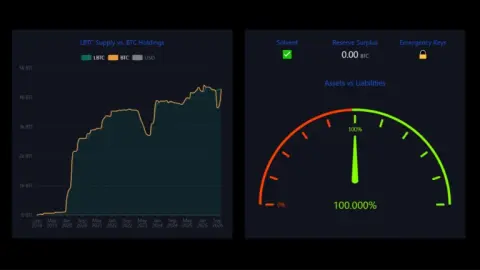
Binance’s proof-of-reserves snapshot from October 31 lets users check that their own balances are backed. It does not include the insurance fund, which Binance describes as its own reserve, published separately on a fund-history page that refreshes daily.
A clean reserve snapshot answers whether deposits are backed, the question behind Coindoo’s look at Binance’s withdrawal figures. It says nothing about how much default risk the fund can still absorb.

How Arbitrum Froze a Hacker’s Crypto in 10 Minutes
The Case for Staying Calm
There is a solid argument that most Bitcoin hedgers face little practical risk. Binance says the remaining fund still meets its required size and is topped up from company money when it falls short. Below the open-interest cap, the guarantee rules out ADL on the main Bitcoin contracts, and above it a low-leverage hedge still sits near the back of the queue.
A cut is not automatically a loss either. ADL is typically triggered in fast, disorderly moves, and when those reverse, the 4 BTC left unhedged in the example gains rather than loses.
What the counter-argument does not change is control. After a cut, the size of the bet is no longer the trader’s choice, and rebuilding the hedge often has to happen when liquidity is thin.
What to Check Before and After a Cut
Binance has said it will publish a post-incident report once its investigation is complete. Until then, the published data and the account itself are the only reliable gauges.
Before
- ADL indicator on each hedge position
- Combined open interest on the guaranteed contracts
- Daily insurance fund balance, for further drawdowns or top-ups
After
- Short size against the Bitcoin still held
- Stops and take-profits to replace
- Current price and funding rate before re-entering
If open interest stays under the cap and the fund balance holds steady in the daily updates around the post-incident report, the guarantee and the queue rules do most of the work for a low-leverage hedge. Rising open interest alongside a shrinking fund would be the clearer sign that those protections are thinning.
This story was originally published by Coindoo. Read the original article.