US Bitcoin ETFs See $4.71 Billion November Outflows While BlackRock’s IBIT Gains 4.85%
Spot Bitcoin fund redemptions mounted through November even as BlackRock's flagship ETF share price advanced.
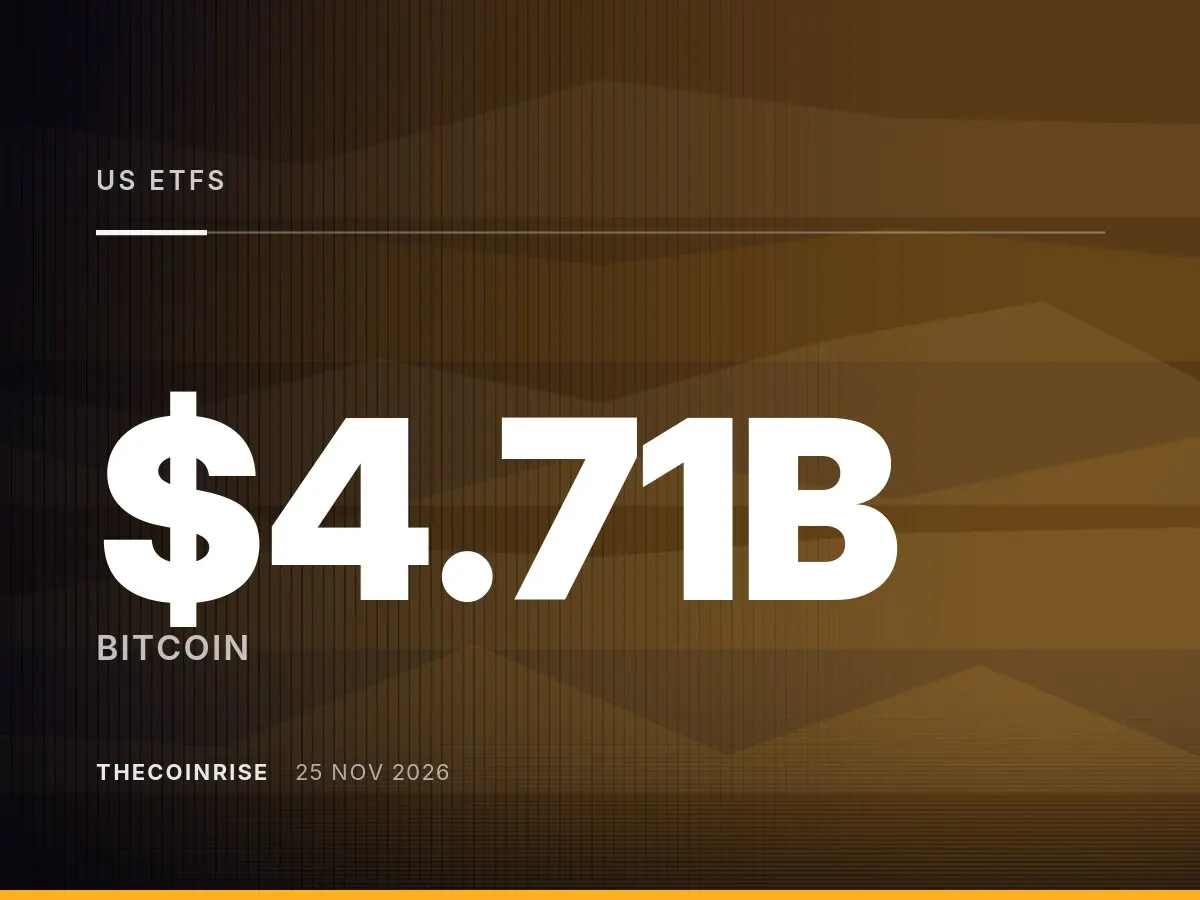
US spot Bitcoin exchange-traded funds shed an estimated $4.71 billion in net assets during November, CoinTurk News reported. The figure marks one of the steeper monthly outflow totals since the products launched in early 2024. Investors pulled capital even as Bitcoin's price came under pressure through the month.
BlackRock's iShares Bitcoin Trust, the largest fund in the category by assets, moved against that backdrop. Crypto Economy reported IBIT's share price rose about 5%, while CoinTurk put the gain at 4.85%. The increase came despite BlackRock also being cited as a leading source of redemptions elsewhere in the same reporting window.
Daily and multi-day outflow figures varied across reports. Bitcoin.com News said Bitcoin ETFs lost $570 million in a single session, and that BlackRock's funds alone saw a three-day outflow streak totaling $1.6 billion. Separately, crypto.news reported $728 million exiting combined Bitcoin and Ethereum ETFs, with BlackRock again identified as the largest contributor to the withdrawals. The differing figures likely reflect different measurement windows, ranging from single sessions to the full month.
Bitcoin Magazine connected the outflow pressure to price action, reporting that Bitcoin's spot price slipped to $60,000 as November's ETF redemptions reached what it described as a record pace. A declining spot price alongside heavy ETF outflows typically signals reduced short-term demand from institutional allocators who access Bitcoin through regulated fund wrappers rather than direct custody.
The outflow wave was not confined to Bitcoin products. Crypto Economy reported that a Zcash ETF fell 13% during the same period, suggesting pressure extended into other digital asset investment vehicles. Ethereum ETFs also registered redemptions, based on the crypto.news report citing BlackRock's role in outflows across both Bitcoin and Ethereum funds.
Since their January 2024 launch, spot Bitcoin ETFs have become a primary channel through which institutional investors gain exposure to the asset without directly holding or custodying it. Net flow data from these funds is closely watched as a proxy for institutional sentiment. Large monthly withdrawals, even when paired with a rising share price for an individual fund like IBIT, point to a market where investor behavior is not uniform across products or timeframes.
New to this? The short explainer
What does a '2x leveraged' ETF mean? A leveraged exchange-traded fund is built to deliver a multiple, such as double, of an underlying asset's daily return, rather than tracking it one-to-one. It does this using financial contracts like swaps instead of simply holding more of the asset. Because the leverage resets daily, these funds can swing much more sharply than the asset they are based on, especially on a volatile first day of trading.
Bitcoin around this story
What the futures data on our own BTC terminal showed between the first report and our publication. It shows timing, not cause: prices move for many reasons at once.
Market Impact
Heavy ETF outflows alongside a falling Bitcoin spot price suggest that at least some institutional holders reduced exposure during November, even as BlackRock's IBIT share price moved higher. That divergence may reflect fund-level trading dynamics separate from aggregate flow trends, including share creation and redemption mechanics that do not always track daily net asset value one-for-one.
The spillover into Zcash and Ethereum ETF products indicates the outflow pressure was not isolated to Bitcoin alone. If redemptions persist into December, it could weigh further on spot prices across major digital assets, given the scale of capital these funds now represent in the broader market structure.
Our readAnalysis by the AltcoinGordon desk. Opinion, not reporting.
What it means. The data shows institutional flows are not moving as one block: BlackRock's IBIT is driving the bulk of redemptions even as its own share price rose, while other funds like Fidelity's FBTC took in money on the same day. That split matters for anyone reading ETF flows as a single signal of institutional sentiment.
What it does not show. None of the outlets establish a direct cause for IBIT's share-price gain alongside its outflows; CoinTurk explicitly notes the reports did not identify a direct cause linking the two.
What to watch next
- Whether the outflow streak extends beyond the five to six sessions already reported
- Whether BlackRock's IBIT keeps posting outflows while its share price diverges further
- The Fed's December 8-9 meeting, flagged as a factor in the risk-off mood
The conflicting outflow figures across reports underline how differently outlets measured the November redemption wave, whether by single day, three-day stretch, or full-month total. The overall direction, however, points to a period of sustained institutional selling pressure across Bitcoin and related crypto ETF products.
Go deeper on AltcoinGordon
- Leverage trading explainedBeginner's guide to leverage, margin and liquidation
- Bitcoin liquidation mapWhere leveraged BTC positions would be forced closed
Frequently Asked Questions
How much did US Bitcoin ETFs lose in outflows during November?
CoinTurk News reported total net outflows of about $4.71 billion for the month, while other outlets cited smaller figures for single days or shorter multi-day periods.
Why did BlackRock's IBIT share price rise despite the outflows?
Reports did not specify a direct cause, but a fund's share price can move independently of its net flows due to underlying asset price changes and trading dynamics.
Were outflows limited to Bitcoin ETFs?
No. Crypto Economy reported a 13% drop in a Zcash ETF, and crypto.news reported outflows affecting Ethereum ETFs alongside Bitcoin funds during the same period.
What role did BlackRock play in the broader outflow trend?
Multiple reports identified BlackRock as a leading source of redemptions even as its flagship IBIT share price increased, highlighting a divergence between fund inflows and price performance.
This story was originally published by The Coin Rise. Read the original article.