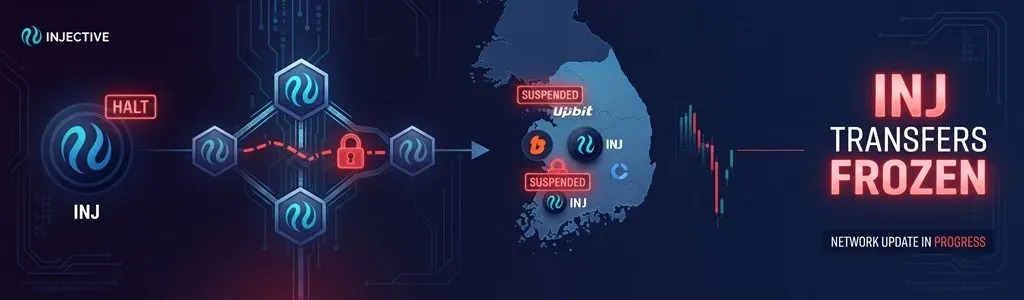
Injective Blockchain Grinds to a Halt Again as Korean Exchanges Freeze INJ Transfers
TL;DR:
- The Injective blockchain temporarily halted block production, replicating operational issues similar to those recorded in previous months, according to reports from specialized media outlets.
- Major South Korean cryptocurrency exchanges, including Bithumb and Upbit, proceeded to preemptively suspend deposits and withdrawals of the native INJ token.
- The incident coincides with the recent launch and listing of structured financial products and exchange-traded funds linked to the ecosystem in international stock markets.
A new temporary disruption was recorded in the block production of the Injective network, an event that triggered an immediate reaction in the digital asset markets of the Asian region. Facing a lack of confirmation for new blocks in the distributed ledger, major cryptocurrency exchanges in South Korea implemented operational restrictions on transfers of the native token.
A market report indicates that this technical behavior reignites discussions regarding the operational stability of Layer 1 networks and the rapid-response mechanisms of validators when facing incidents on the main network. Disruptions in the validation infrastructure directly affect the operability of cross-chain bridges and the liquidity flows managed by users across different jurisdictions.
Reaction of Korean exchanges to the disruption
South Korean exchange platforms, characterized by strict regulatory compliance and rigorous technical risk supervision protocols, adopted cautionary measures almost simultaneously with the detection of the network failure. Data from statements issued by operators indicate that the deposit and withdrawal functions for the INJ token were temporarily frozen to protect the funds of retail and institutional investors.
The suspension of transfers on centralized exchanges prevents users from suffering losses or asset lockups due to desynchronizations in the transaction ledger. However, these measures typically generate short-term volatility and friction in market spot liquidity, given that traders cannot move their holdings to self-custodial wallets or outside trading platforms while network instability persists.
Technical background and market context
The Injective ecosystem had previously faced operational questions when similar outages linked to decentralized application module incidents and validator node stops were recorded. Although development teams of various Layer 1 networks often argue that these pauses are part of security protocols or accelerated base software updates, critical sectors of the market point out that temporary centralization in validator decision-making violates the fundamental principles of decentralization and censorship resistance.
This new episode of technical downtime occurs at a time of high media and financial attention for the protocol. Days prior to the incident, the ecosystem had grabbed headlines due to the launch and trading of exchange-traded funds (ETFs) linked to INJ staking in regulated markets in the United States, as well as the rollout of strategic agreements aimed at settling tokenized assets with stablecoins backed by Asian fiat currencies.
Analysts in the digital financial sector note that trust in high-performance networks depends on the speed and transparency with which engineering teams issue post-mortem incident reports. As of the closing of initial reports, the Injective Foundation and node operators were implementing the necessary code reviews to restore full protocol synchronization and resume transfer services on international exchanges.
This story was originally published by Crypto Economy. Read the original article.