a16z, Uniswap and DeFi Education Fund Take on Illinois Over Crypto Tax Rules
TL;DR:
- Joint regulatory petition: Andreessen Horowitz (a16z), Uniswap Labs, and DeFi Education Fund submitted formal comments on October 30, 2026, against the Illinois Department of Revenue’s draft rules.
- Intermediary exclusion: The organizations request the removal of decentralized exchanges (DEXs) and their interfaces from the legal definition of digital asset brokers.
- Security and self-custody: The filing objects to the mandate requiring private key records and urges regulators not to tax transfers between wallets owned by the same user or cross-chain bridge transactions.
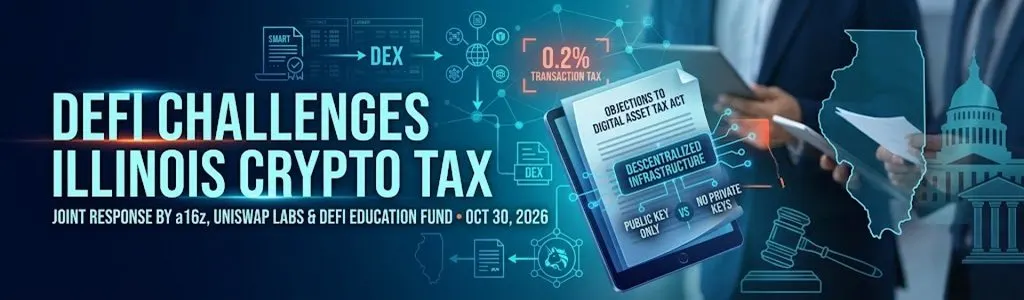
On Friday, October 30, Andreessen Horowitz (a16z), Uniswap Labs, and the DeFi Education Fund submitted a joint response opposing the proposed cryptocurrency tax regulations in the state of Illinois. The filing challenges the regulatory guidelines stemming from the Digital Asset Tax Act.
The technical submission delivered to state regulators argues that the current framework places unfeasible tax obligations on decentralized infrastructure. The official document submitted by the three entities points out that smart contract-based protocols lack the technical capability to act as tax-collecting agents or traditional financial intermediaries.
Structural objections to the brokerage and fee framework
The industry’s argument focuses on 4 operational areas: broker classification, network fee treatment, cryptographic key storage, and the handling of cross-chain transfers.
According to the text submitted by a16z, Uniswap Labs, and the DeFi Education Fund, a decentralized exchange operates without banking intermediaries, and users maintain direct control over their funds at all times. The official documentation indicates that the state draft sought to classify user interfaces and protocols as digital asset brokers solely for charging protocol fees.
In this regard, the petitioners requested that the Illinois Department of Revenue confirm that those trading on a DEX for their own account fall under the dealer-trader principal exclusion. Furthermore, the technical report explains that protocol fees directed to burn mechanisms or executed automatically via code do not represent direct commercial compensation for developers.
A key point within the joint document addresses the regulatory requirement to collect and maintain records of users’ private keys.
The organizations maintain that mandating private key retention compromises the integrity of the ecosystem and contradicts existing asset protection standards. The official filing notes that holding private keys increases the risk of security breaches and theft of funds, which is why they requested replacing any such requirement solely with the use of public wallet addresses and on-chain transaction identifiers.
The analysis submitted by the industry groups also rejects the application of taxes on transfers between accounts controlled by the same person.
According to the arguments of Uniswap Labs and its allies, withdrawing digital assets from custodial platforms to self-custody wallets does not constitute a taxable sale or disposition. The document compares this operation to the physical relocation of assets between personal storage spaces. Regarding cross-blockchain transactions (bridging), the participants warned the tax authority that taxing these transfers would trigger double taxation on the same asset while legal ownership remains unchanged.
Implications for the state transaction tax law
Illinois legislation includes a 0.2% levy on the gross value of digital asset transactions executed through registered intermediaries.
Unlike federal taxes applied to realized capital gains, Illinois regulations calculate the rate on the gross transferred volume. According to technical estimates from the sector, a representative transaction of $10,000 would generate a $20 tax, regardless of the operating margin or fee earned by the platform.
The administrative comments filed on October 30, 2026, proceed through a separate procedural track from the ongoing lawsuits brought by the Chamber of Digital Commerce and the Illinois Blockchain Association.
While the court actions seek the judicial invalidation of the 0.2% tax on state and federal constitutional grounds, this formal filing aims to amend the technical regulations directly before administrative implementation. The compliance schedule for the enactment of these tax rules remains stayed under an injunction until July 1, 2027, the date on which the extension agreed upon between the State of Illinois and industry plaintiffs expires.
This story was originally published by Crypto Economy. Read the original article.