Coinbase Keeps 99% of Customer Assets in Cold Storage After $6.3B Binance Hack
Coinbase holds more than 99% of its customer assets in cold, offline storage. This was confirmed by Brian Armstrong, who added that he aims to reassure users and reaffirm the strength of its custody infrastructure following the hot wallet exploit of over $6.3 billion suffered by its main competitor, Binance.
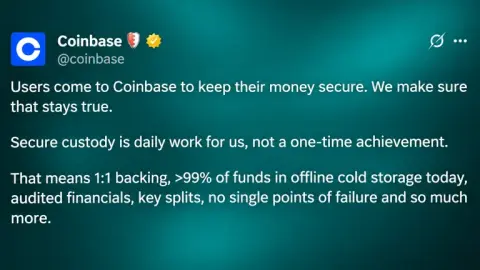
Users come to Coinbase to keep their money secure. We make sure that stays true.
Secure custody is daily work for us, not a one-time achievement.
That means 1:1 backing, >99% of funds in offline cold storage today, audited financials, key splits, no single points of failure and…
— Coinbase 🛡 (@coinbase) November 4, 2026
This reminder becomes critically relevant in a context where the vulnerability of hot wallets once again puts the security standards of centralized exchanges under scrutiny. By leveraging advanced schemes such as multi-party computation (MPC) and distributed signatures, Coinbase seeks to consolidate its position as a regulated institutional custodian, distinguishing itself from the operational breaches that have impacted other firms across the ecosystem.
This reinforces the debate surrounding physical reserves and global regulatory pressure, which is already driving stricter offline custody standards. The industry’s next key step will be the widespread adoption of real-time proof-of-reserve verifications and regulatory requirements that mandate higher cold storage minimums to safeguard retail and institutional funds.
Source: https://x.com/coinbase/status/2117981643247952021
Disclaimer: Crypto Economy Flash News is compiled from official and public sources verified by our editorial team. Its purpose is to deliver prompt reporting on key developments across the crypto and blockchain ecosystem. This information does not constitute financial advice or investment recommendations. We recommend always verifying the official channels of each project before making related decisions.
This story was originally published by Crypto Economy. Read the original article.