A Practical Guide to Tokenized RWAs: From Choosing Assets to Building Crypto Wealth
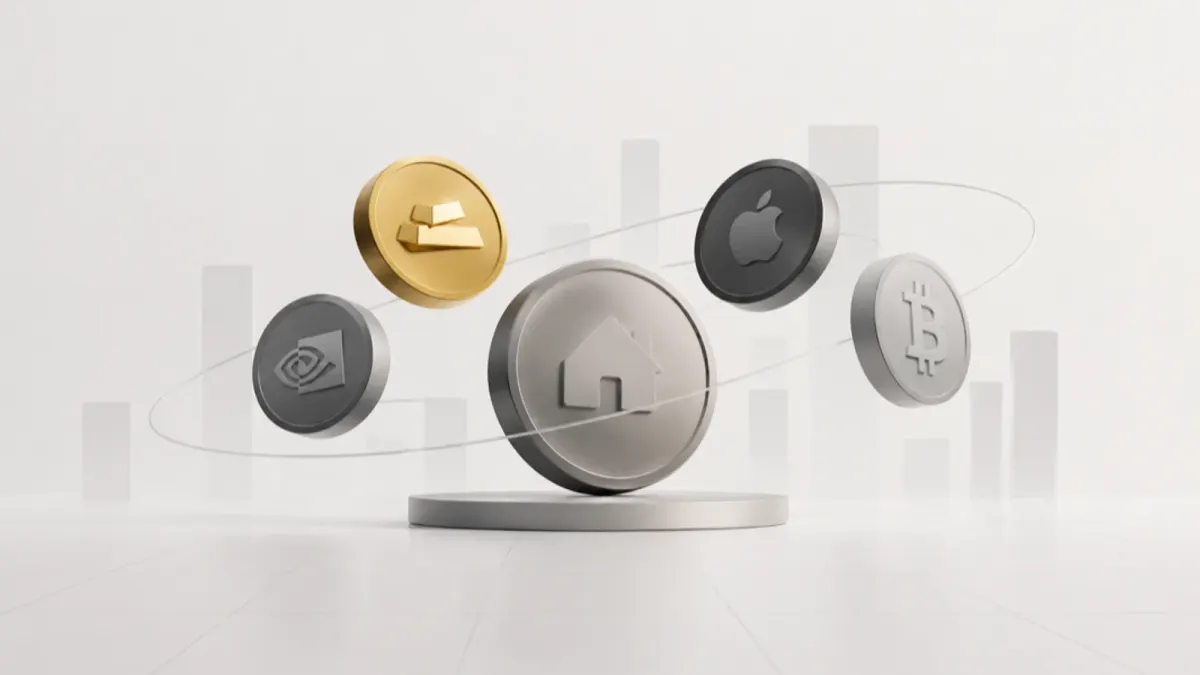
Over the past two years, I have watched tokenized real-world assets grow from an experiment into a market approaching $40 billion, according to RWA.xyz.
What I see far less often is a clear view of two things: what these tokens actually provide, and what to do with them once they are held. The first is a question of structure: a token that tracks gold or NVIDIA perfectly on a chart may carry far fewer rights than the asset itself, and none of this is visible in a trading interface. The second is a question of strategy. Tokenized assets can be treated the way banking clients treat their securities: as capital with a defined role, rather than as one more position. That, however, requires knowing how.
In this article, I’ll share how I evaluate a tokenized asset, where I believe it fits in a crypto portfolio, and what it takes to preserve that capital over the long term. You’ll come away with a short checklist for any token you hold and a simple framework for managing your wealth.
5 Checks Before You Buy Tokenized RWAs
When I look at a tokenized asset, its quality comes down to five points, and none of them show on the price chart.
One Asset, Different Tokens: How to Choose
One thing I find useful to keep in mind: two tokens can follow the same asset and still be built differently. This is normal. In traditional finance, an ETF and a directly held share also give similar exposure on different terms. Knowing the structure simply helps you choose the token that fits your goal. Two of the most widely held tokenized assets, gold and stocks, show how this works in practice.
Take gold: PAX Gold (PAXG) and Tether Gold (XAU₮) are each backed by one fine troy ounce of physical gold, so their prices move almost identically. They are issued by different companies, with their own custody arrangements and redemption terms. PAXG, for example, gives holders beneficial ownership of allocated gold stored in a vault. Exchanging tokens for a physical bar is possible, subject to a minimum quantity set by the issuer. For most holders, the value of the token is exposure to gold that can be held and moved as easily as any other digital asset.
Tokenized stocks follow the same logic: NVIDIA xStock (NVDAX) tracks NVIDIA shares 1:1. According to the issuer’s documentation, it is a tracker certificate issued by Backed Assets (JE) Limited and backed by NVIDIA shares held with custodians. Holders receive the economic performance of the shares without voting rights, and direct redemption through the issuer requires identity verification and a $5,000 minimum.
In both cases, the token delivers what it is designed for: price exposure that is easy to hold, transfer and combine with the rest of a crypto portfolio. If you need something more, such as the physical metal or a shareholder vote, the issuer’s terms will tell you whether it is available. I always recommend spending a few minutes with those terms. It is the simplest way to hold an asset knowing exactly what it gives you.
From Tokenized Stocks and Gold to Crypto Wealth
Once a token passes these checks, the question changes from whether the asset is sound to how it fits into a broader plan. This, to me, is where managing wealth differs from holding assets. Private banking clients rarely make decisions asset by asset. They start with a plan: what the capital is meant to achieve, over what horizon, and how much risk each part of it can carry. Every decision to buy, hold, sell or borrow is then measured against that plan rather than against the latest market move. We saw this clearly during the 2026 correction. In our joint study with CryptoQuant, speculative leverage on futures markets contracted while demand for collateralized lending grew: large holders were managing liquidity, not exiting positions.
In practice, I think of such a plan as dividing capital by purpose. Part of it preserves what has been built, part is committed to long-term growth, and part stays accessible for when money is needed. Tokenized assets now make this structure available to crypto holders, within the same portfolio as their digital assets.
Preserve
For years, the safe part of a crypto portfolio meant stablecoins: stable in price, but earning nothing and tied entirely to crypto infrastructure. Tokenized treasuries change that. The same capital can now hold short-term government debt, earn a yield and still sit on-chain, ready to move within minutes. For money set aside for a property purchase or a planned investment, that combination is genuinely new.
Tokenized gold adds something stablecoins never could: an asset with a centuries-long record, independent of crypto markets. What I find most useful is the speed. Shifting part of a portfolio from Bitcoin to gold used to involve a bank, a broker and several days. Today it is a single on-chain transaction.
Grow
The growth part of a crypto portfolio has traditionally meant more crypto. Tokenized equities open a second line: exposure to companies like NVIDIA without a brokerage account, held in the same wallet and transferable at any hour. For many crypto holders, this is the first time public equities have been within practical reach.
The value here comes from price appreciation. Tokenized equities move with the shares behind them, so the growth part of a portfolio can now rely on two engines rather than one: crypto and the companies driving the wider economy. In my view, that balance is what makes a long-term position easier to hold, because its performance no longer depends on a single market.
Access
At some point, most holders need funds for a purchase, a tax bill or a business opportunity. The usual answer is to sell, which often means exiting a long-term position at a moment chosen by circumstances rather than by the market.
In traditional finance, investors have long solved this by borrowing against their stock portfolios instead of selling them, a standard service at private banks and brokerages, and one we explored in more detail in our recent study with CryptoSlate. Until now, crypto holders could do the same only with crypto itself. At CoinRabbit, we have recently added tokenized stocks and tokenized gold as collateral, so it is possible to borrow against shares of companies like Tesla or Amazon. In essence, this is the same instrument private banking clients have long used, moved onto a blockchain.
The difference lies mostly in the process. Borrowing against stocks at a bank usually means a credit check, an application and days of paperwork. With tokenized assets, the loan rests entirely on the value of the collateral, so there are no credit checks, no paperwork and no lengthy approvals. What does not change is how a lender thinks. Working on this side, I see that the assets that make the best collateral are the ones that pass the checks above: actively traded, reliably priced and clearly redeemable. Combined with tools such as crypto loan restoration, this gives holders more flexibility in managing their portfolios.
Building a Long-Term Crypto Wealth Strategy
A plan is only as reliable as the system that supports it. Over a horizon of ten or twenty years, I believe that structure depends as much on the partners you choose as on the assets you hold.
Partners. Custodians, exchanges and lending platforms all become part of how wealth is managed, so I would choose them the way private banking clients choose a bank: for the long term. The criteria I look at are a track record across market cycles, transparent terms, clear regulatory standing and conditions that stay predictable over time. Equally important, in my view, is the human side of the relationship. When markets move fast, having someone who already understands your position is worth more than any feature list. These are the principles behind the Private Program at CoinRabbit, our boutique service for investors, family offices and businesses, where each client works with a dedicated success manager on terms tailored to their portfolio.
Liquidity. Almost anything can be tokenized today, and the range keeps expanding: real estate, private credit, art, even forests. Most of these tokens, however, have little or no market behind them. A token that cannot be sold when needed is not capital, however attractive the underlying asset may be. I would stay with the tokens that already have deep, active markets and leave the rest until they do.
Review. A plan is not set once. Goals shift, horizons shorten, and market moves change the weight of each asset in the portfolio. I find a regular review, once or twice a year and after any major life or business event, the simplest way to keep the structure aligned with its purpose: rebalancing where one asset has outgrown its role, moving capital between the preserve, grow and access parts, and confirming that partners still meet the criteria they were chosen for.
Making Money in Crypto Was Only the First Part
Crypto has proved remarkably good at helping people build assets. The harder step comes later: turning those assets into wealth. That shift is less about finding the next opportunity and more about deciding what the capital is for, how it should be structured and how to keep it intact through cycles no one can predict.
Tokenized real-world assets do not solve this on their own. What they do is make the familiar instruments of wealth management, such as bonds, gold and borrowing against a portfolio, available to people whose capital was built in crypto. Using them well still comes down to what it always has: a clear plan, reliable partners and patience. Crypto taught many of us how to make money; keeping it calls for a different discipline.
Long-term capital preservation is what we have built CoinRabbit around. Explore how to manage your crypto and tokenized assets securely in one ecosystem.
This story was originally published by Finbold. Read the original article.